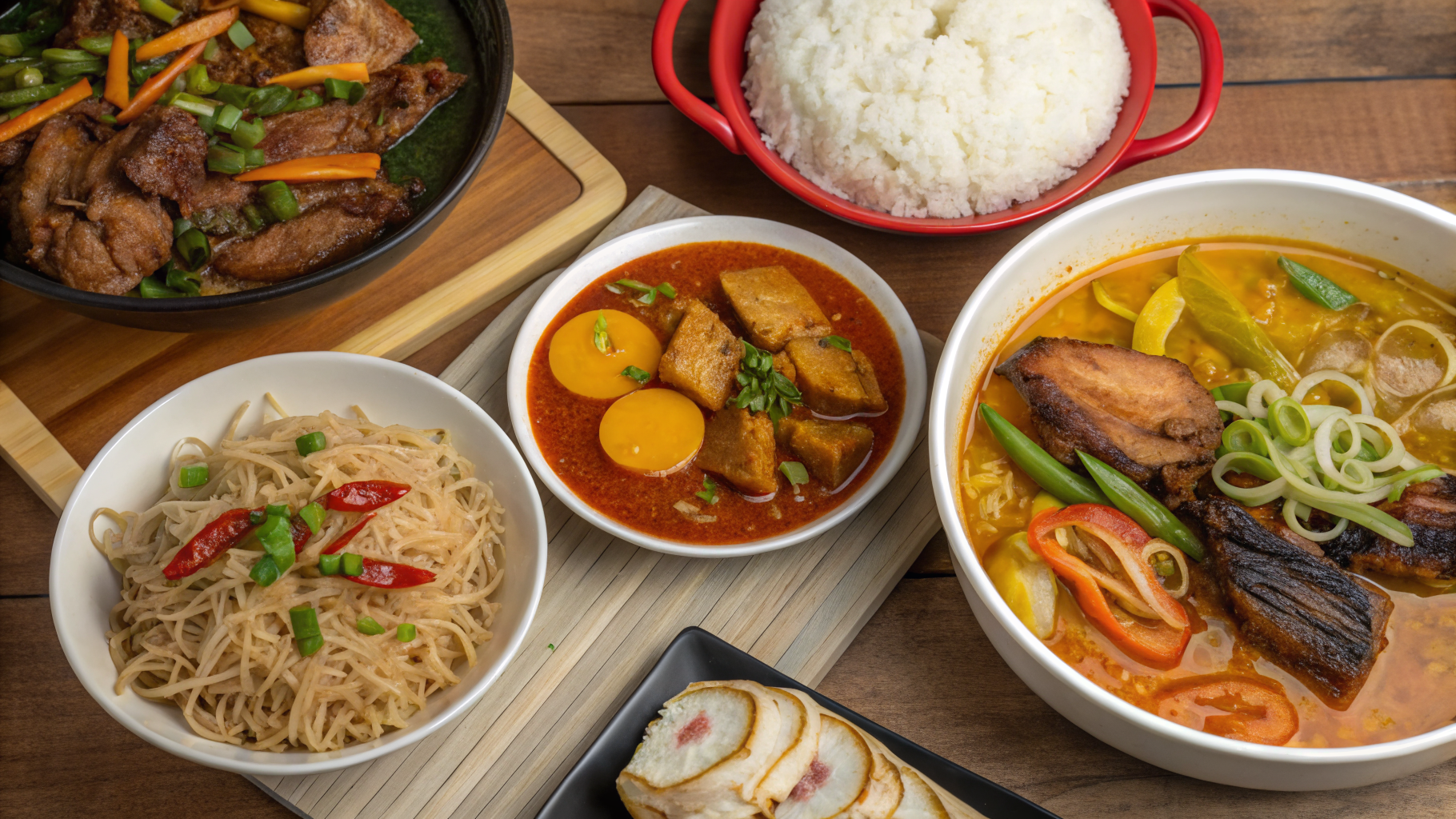
10 Filipino dishes to try when visiting the Philippines
The first time I ate balut was at 2am on a plastic stool outside a 7-Eleven in Cubao, Manila. A vendor named Manong Ric handed it to me with salt and vinegar and watched my face. I didn’t love it. But I went back the next night because the experience of eating on the street in the Philippines, the noise, the warm San Miguel, the conversations with strangers, became the thing I actually came for.
The Philippines doesn’t get the food tourism credit Thailand or Vietnam do. That’s a mistake. The flavors are louder, the influences stranger (Spanish, Malay, Chinese, American all crashing into each other), and the street Filipino food culture is genuinely one of the best in Southeast Asia. Below are the Filipino dishes to try on your first trip, based on what I actually ate, where, and what I’d order again.
Table of Contents
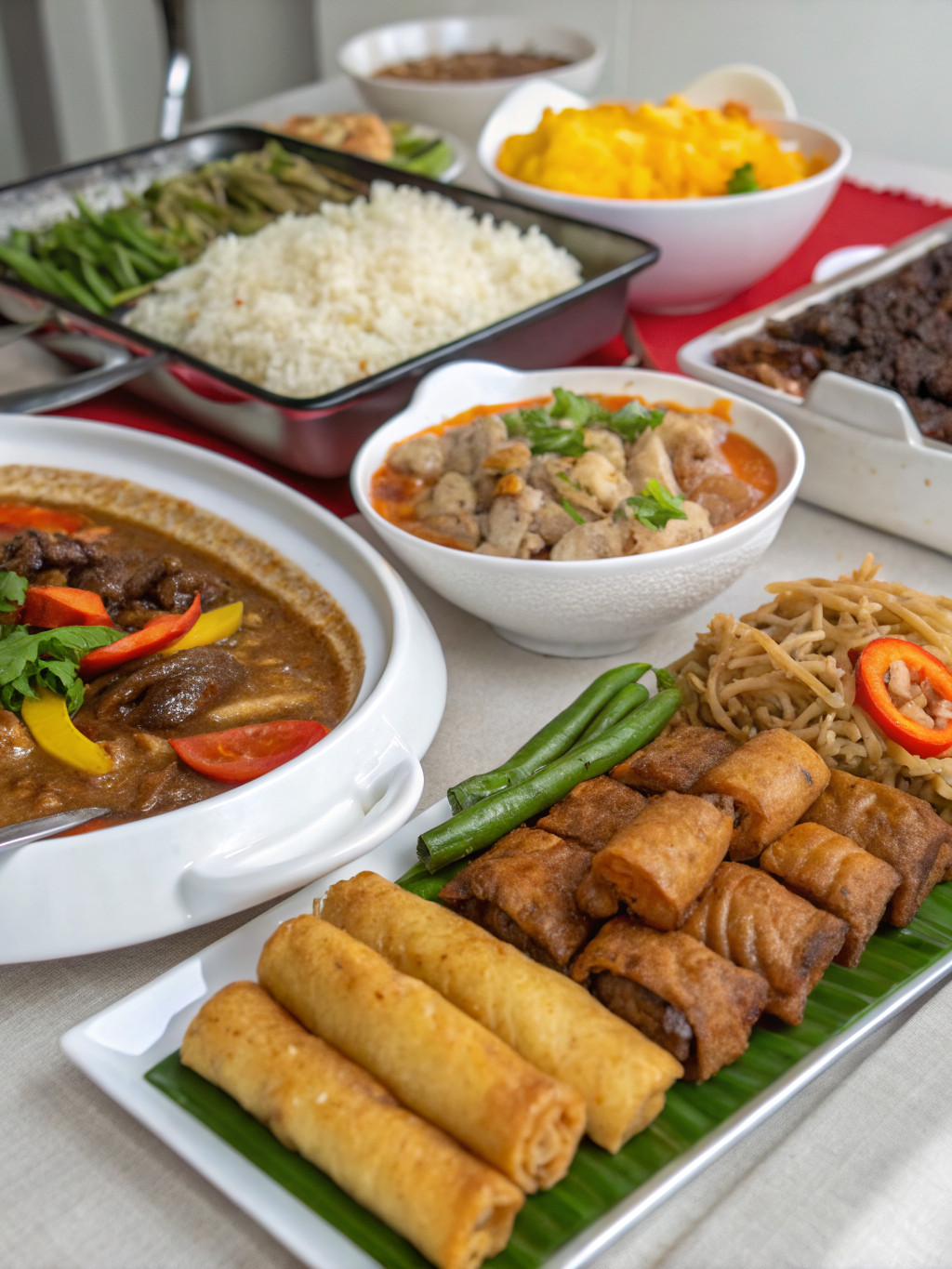
Why Filipino Food Surprises First-Time Visitors
Most travelers arrive expecting something close to Thai or Indonesian cooking. It isn’t. Filipino food leans sour, salty, and fatty rather than spicy. Vinegar shows up everywhere. Coconut shows up in the south. Pork shows up in nearly everything.
The other surprise is how regional it gets. Cebu does lechon better than Manila will ever admit. Pampanga is the unofficial culinary capital. Bicol throws chilies into coconut milk in ways that genuinely catch you off guard. You can’t really “do” Filipino food in one city.
Lechon: The Dish That Ruined Pork For Me Everywhere Else
Cebu lechon is the one. I had it first at a roadside spot in Talisay City for around 450 pesos a kilo, and the skin shattered like glass. Manila lechon is fine. Cebu lechon is something else, they stuff it with lemongrass, garlic, and scallions, and the meat tastes seasoned all the way through.
If you’re only going to Manila, head to Rico’s or La Loma for a decent version. But if your itinerary includes Cebu, build a whole afternoon around this.
Sisig: The Best Thing to Eat With Beer
Sisig is chopped pork (traditionally cheek, ear, and liver) sizzling on a hot plate with calamansi, chilies, and sometimes a raw egg cracked over the top. It was invented in Pampanga and it’s the dish I order more than any other when I’m back.
The version at Aling Lucing’s in Angeles City is the original, and it’s still served in a cramped place near the train tracks. In Manila, almost any beer garden does a respectable one. Order it with rice, not without, the fat needs somewhere to go.
Adobo: Every Family Makes It Differently
Adobo is meat (usually chicken or pork) braised in vinegar, soy sauce, garlic, bay leaves, and peppercorns. That’s the base. After that, it’s chaos. Some families add coconut milk. Some add sugar. Some fry the meat after braising. My misconception before going was that there was a “correct” adobo. There isn’t.
Eat it at a carinderia (a small neighborhood eatery) rather than a tourist restaurant. The version at any random carinderia in Quezon City will beat what you get at a hotel buffet.
Kare-Kare: The Peanut Stew That Needs Bagoong
Oxtail and vegetables in a thick peanut sauce, served with shrimp paste on the side. Don’t skip the shrimp paste, it’s not a garnish, it’s the entire point. The sweetness of the peanut sauce needs that funky, salty hit to make sense.
I made the mistake of eating kare-kare without bagoong the first time and thought it was overrated. It wasn’t. I just didn’t know how to eat it.
Halo-Halo: Dessert That Looks Like a Mistake
Shaved ice, evaporated milk, sweet beans, jackfruit, leche flan, ube ice cream, and a scoop of whatever else the vendor feels like adding. It looks chaotic. It is chaotic. It’s also perfect when it’s 35 degrees in Manila and you’ve been walking around Intramuros for three hours.
Razon’s does a minimalist version. Chowking does the loud commercial one. Both are worth trying once.
Sinigang: The Sour Soup That Cures Hangovers
Sinigang is a sour soup, usually made with tamarind, and packed with pork or shrimp and vegetables. It’s the dish Filipinos eat when they’re sick, hungover, or homesick. After three days of rich, fried food, your body will start asking for it.
The tamarind version is standard, but try the one made with green mango or kamias if you see it. Sourness levels vary dramatically between cooks.
Filipino dishes to try Eating Standing Up
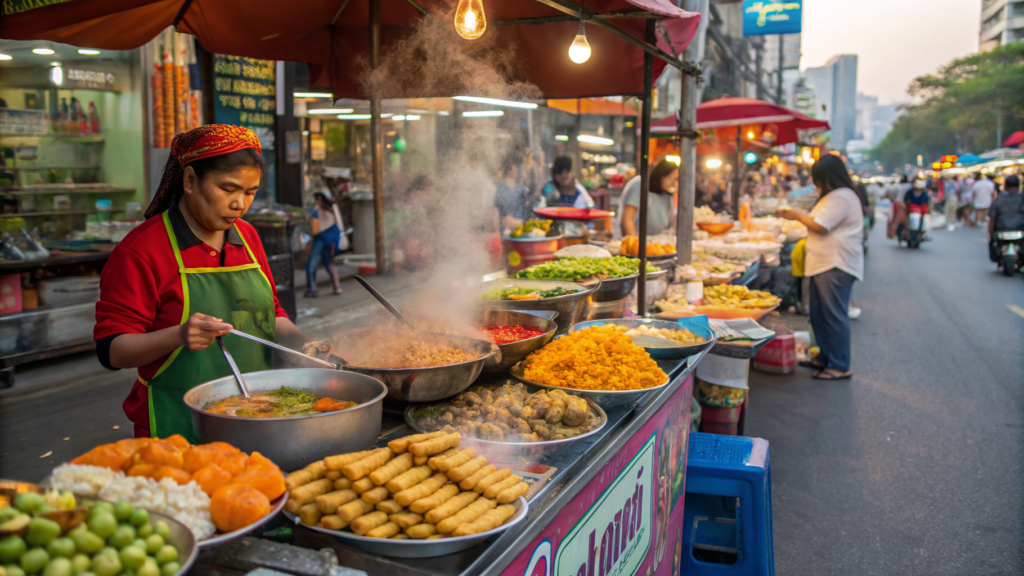
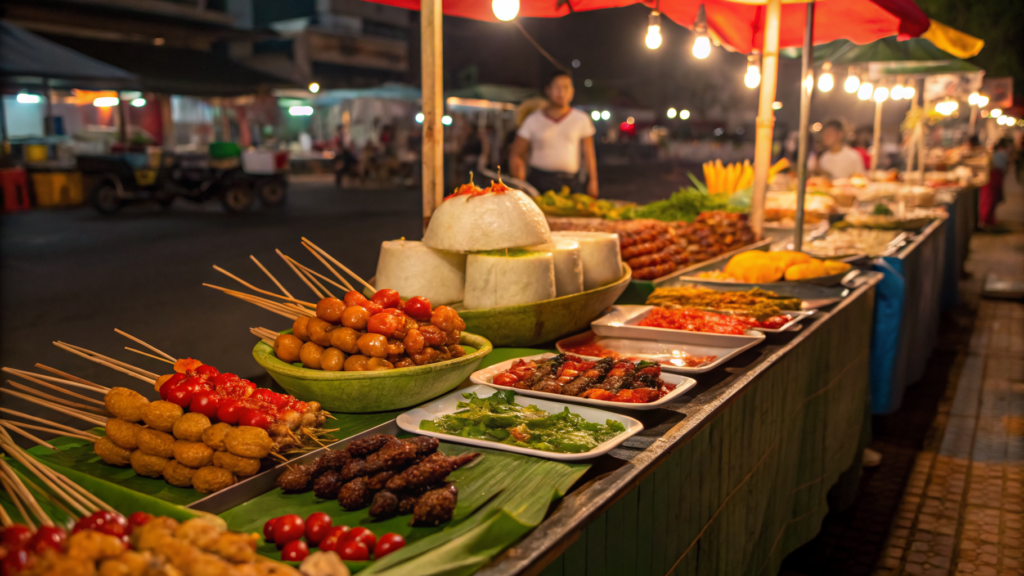
This is where the country really comes alive. The best meals I’ve had in the Philippines were eaten off skewers or out of plastic bags. A few to look for:
- Isaw — grilled chicken or pork intestine on a stick, dipped in spiced vinegar
- Kwek-kwek — quail eggs in orange batter, deep fried, sold for around 15 pesos each
- Taho — warm silken tofu with brown sugar syrup and tapioca pearls, sold by vendors who walk through neighborhoods at sunrise yelling “TAHOOO”
- Fish balls — sold from carts with three different sauces; the sweet one is the move
- Banana cue — deep-fried saba bananas coated in caramelized sugar
The taho guy on Mabini Street in Malate woke me up every morning of my second trip. I still think about it.
Bicol Express: For People Who Want Heat
Filipino food generally isn’t spicy. Bicol Express is the exception. Pork stewed in coconut milk with a ridiculous amount of green chilies, originating from the Bicol region in southern Luzon. If you’ve been craving heat after a week of mild adobo and sinigang, this is the antidote.
I had the best version in Legazpi, near Mayon Volcano, at a small place where the owner kept asking if I wanted it less spicy. I didn’t. I regretted that around bite four. Worth it.
Pancit: The Noodle Dish for Every Occasion
Pancit is the catch-all term for noodle dishes, and there are dozens of versions. Pancit Canton (egg noodles, stir-fried), Pancit Palabok (rice noodles with shrimp sauce), Pancit Malabon (similar but heartier). It’s served at every birthday because long noodles symbolize long life.
If you only try one, make it palabok. The orange sauce, the crushed chicharron on top, the boiled egg, it’s a complete meal in one plate, usually for under 150 pesos at a decent restaurant.
Balut: You Should Try It Once
A fertilized duck embryo, boiled and eaten from the shell. It’s polarizing, obviously. The texture is the hard part, not the taste — the broth inside is genuinely good, savory and rich. The embryo itself is the challenge.
Eat it at night, when vendors carry baskets through the streets calling “baluuut.” Buy two. The first one is shock. The second one is when you actually taste it.
If I went back tomorrow, I’d skip Manila for the first week entirely and fly straight to Pampanga or Cebu. The food in Manila is good, but it’s the regional cooking that made me understand the country. I’m still trying to figure out whether Iloilo’s batchoy is better than Pampanga’s sisig as a hangover cure. Probably need another trip to decide.