Best Tokyo Itinerary: 3, 5 & 7 Day Travel Plans
Ever stared at a Tokyo map feeling like you’ve accidentally landed in an alternate universe? Yeah, same here. Tokyo is wild—a mashup of ancient temples, neon-lit skyscrapers, anime dreamlands, and food so good you might cry a little. Planning your Tokyo itinerary can feel like trying to solve a Rubik’s cube blindfolded, but don’t sweat it. I’ve got your back with travel plans that flex whether you’re just dropping by for a quick 3-day blitz, have a chill 5-day trip, or want to unpack for a week to soak in every quirky corner.
Ready to turn those overwhelming possibilities into an actual plan? Let’s get you sorted.
Table of Contents
Quick Article Summary
- 3-day Tokyo itinerary: Must-see highlights for a quick but epic visit.
- 5-day Tokyo itinerary: A paced, well-rounded mix of history, culture, and modern vibes.
- 7-day Tokyo itinerary: Deep dive into neighborhoods, food, temples, and hidden gems.
- Pro tips on food spots, transport hacks, and cultural tidbits sprinkled throughout.
- No boring lists—just real talk about what’s worth your time.
Before You Arrive
Get a Suica card at the airport. It’s a reloadable IC card that works on every train, bus, and most convenience stores. Load ¥5,000 and top up as needed. Don’t waste time buying individual tickets at machines.
Download Hyperdia or Google Maps for train routing. Tokyo’s train system is dense but logical — the confusion is mostly about which platform, not which direction.
Walk more than you think you need to. The most interesting parts of Tokyo often appear between the destinations you planned to visit.
3-Day Tokyo Itinerary: Hit the Highlights Without Losing Your Mind
Three days is enough to get a clear sense of the city without rushing. The key is picking neighborhoods that contrast well rather than ones that cluster.
Day 1 — East Tokyo: History and Subculture
Morning — Asakusa Senso-ji is Tokyo’s oldest temple, built in the 7th century. Arrive before 8am and the Nakamise shopping street leading to the main hall is quiet enough to see properly. By 9am tour groups arrive and the atmosphere shifts. The temple itself is free; the surrounding streets have good breakfast options including ningyo-yaki (small cakes filled with sweet red bean paste) from vendors who’ve been there for decades.
Afternoon — Ueno The Tokyo National Museum in Ueno Park covers Japanese art and archaeology across multiple buildings. Two hours handles it well. If museums aren’t your priority, Ameyoko Market just outside Ueno station is a dense street market selling everything from dried fish to sneakers — more interesting as an atmosphere than a shopping destination.
Evening — Akihabara Five minutes from Ueno by train. Multi-floor electronics stores, gaming arcades, and anime merchandise shops stacked on every block. Buy something or just walk through — either way it’s unlike anything else in the world.
Day 2 — West Tokyo: Culture and the Famous Crossing
Morning — Harajuku and Meiji Shrine Start at Meiji Shrine. The forested approach through old-growth trees takes about 15 minutes to walk and provides a quiet that’s genuinely rare in central Tokyo. The shrine itself was built in 1920 to honor Emperor Meiji. After the shrine, Takeshita Street immediately to the south is the complete opposite — a narrow lane crammed with costume shops, crepe stands, and teenagers in elaborate outfits.
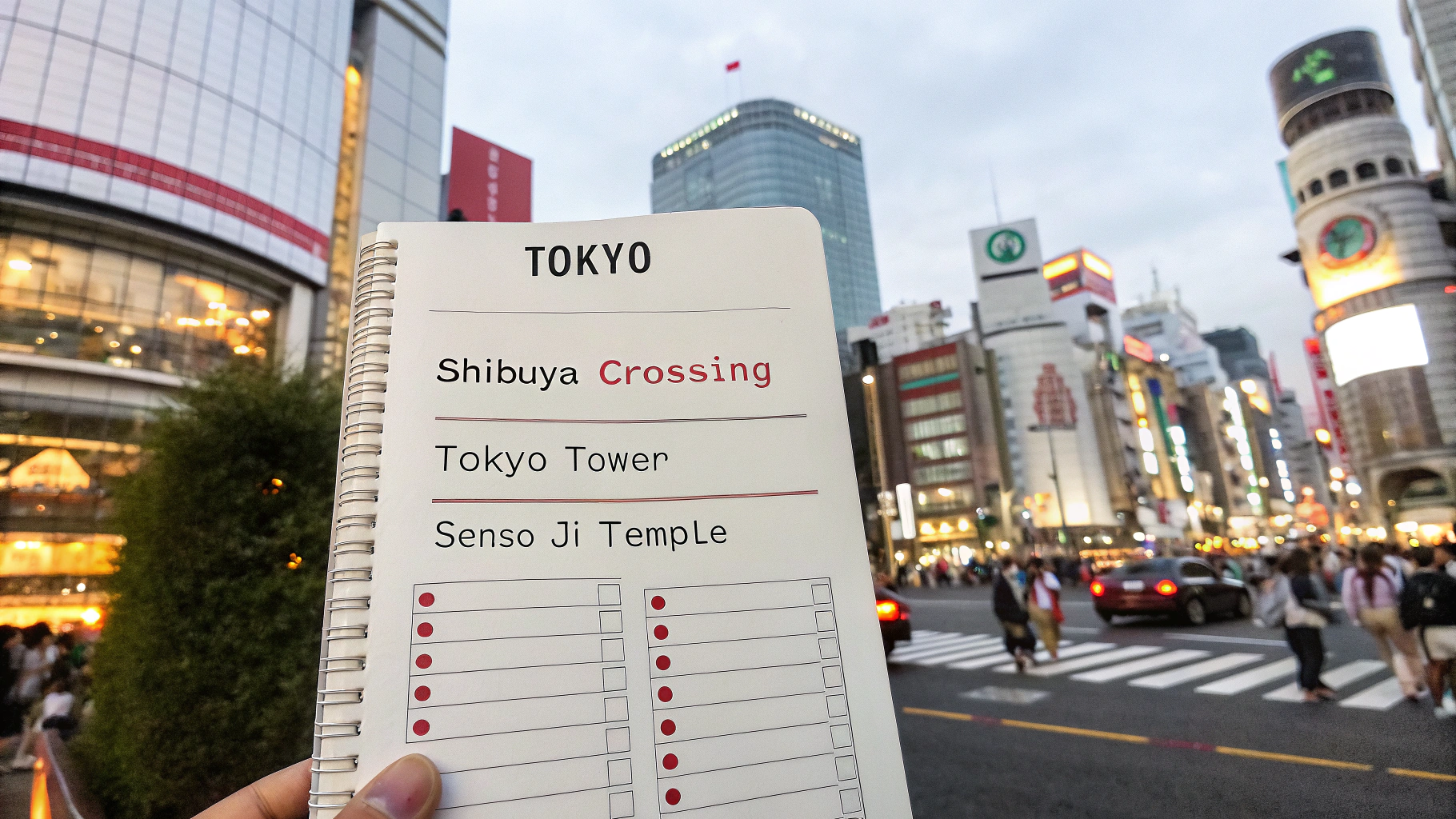
Afternoon — Shibuya The scramble crossing is worth seeing once. Go to the second floor of the Starbucks on the corner for the overhead view before going down to cross it yourself. Shibuya itself has good shopping in every direction. Shimokitazawa, two stops away on the Keio Inokashira line, is quieter — a neighborhood with vintage clothing shops, small live music venues, and better food than the tourist areas.
Evening — Shinjuku Tokyo’s densest entertainment district. Golden Gai is a collection of tiny bars — most fit 6–8 people — tucked into narrow lanes near Shinjuku station east exit. Each has its own personality and regular crowd. Some welcome strangers enthusiastically; some less so. Walk through a few before committing to one.
Day 3 — Food and Neighborhoods
Morning — Tsukiji Outer Market The famous inner fish market moved to Toyosu, but the outer market vendors stayed. Arrive between 7–9am for the best selection — grilled scallops on skewers, fresh-cut tuna over rice, tamagoyaki rolled to order. Eat as you walk.
Afternoon — Ginza and Yanaka Ginza for window shopping and architecture — the area has the highest concentration of flagship stores in Japan and some interesting modernist buildings. Then take the train to Yanaka, one of the few Tokyo neighborhoods that survived WWII and retains its pre-war street layout. Narrow lanes, old temples, a historic cemetery worth wandering through, and small craft shops. No agenda required — just walk.
5-Day Tokyo Itinerary: Add These Two Days
Day 4 — Hidden Tokyo
Nezu Shrine — smaller than Fushimi Inari in Kyoto but with a similar tunnel of red torii gates that photographs beautifully. Early morning is best; rarely crowded.
Yanesen area — the combined neighborhoods of Yanaka, Nezu, and Sendagi form a slow, old-fashioned part of the city that rewards an afternoon of unhurried walking. Good independent cafes and small galleries throughout.
Rikugien Garden at twilight — a classical Japanese garden with seasonal illumination. The reflected light on the central pond at dusk is one of the better quiet moments Tokyo offers.
Day 5 — Futuristic Tokyo
Odaiba — an artificial island connected to central Tokyo by the Rainbow Bridge. Teamlab Planets (separate ticket, book in advance) is a genuinely impressive immersive digital art installation — rooms of projected light and reflection that are difficult to explain and worth experiencing. The surrounding area has good views back toward the city.
Hamarikyu Gardens — a traditional garden near Shiodome that contrasts sharply with the skyscrapers surrounding it. The garden was the Tokugawa shogun’s duck-hunting ground in the 17th century. A traditional teahouse in the center serves matcha and wagashi (Japanese sweets) for a few hundred yen.
7-Day Tokyo Itinerary: Add These Two Days
Day 6 — Day Trip: Nikko or Kamakura
Both are under 2 hours by train and offer a completely different version of Japan.
Nikko has the most elaborate shrine complex in Japan — Tosho-gu Shrine is gilded, ornate, and almost overwhelming in its detail, a deliberate contrast to Kyoto’s aesthetic of restraint. The surrounding forested mountains add atmosphere. Take the Tobu Nikko line from Asakusa.
Kamakura has the Great Buddha — a 13.35-meter bronze statue cast in 1252, sitting outdoors in a wooded valley. The surrounding area has good hiking trails connecting smaller temples, and the town itself has excellent seafood restaurants near the beach. Take the JR Yokosuka line from Tokyo station.
Day 7 — Local Neighborhoods
Koenji — a neighborhood west of Shinjuku known for vintage clothing, independent record shops, and a local arts scene that has nothing to do with tourist Tokyo. The market area around Koenji station has good lunch options.
Daikanyama and Ebisu — slightly upscale but interesting. Daikanyama T-Site is an architecture-forward bookstore complex that’s worth seeing as a space even if you don’t buy anything. The walk between Daikanyama and Nakameguro along the canal takes 15 minutes and the canal area has concentrated well-designed small restaurants and cafes.
Evening wrap-up — the area around Tokyo station has undergone significant renovation in recent years and the historic red-brick station building at night, lit against the surrounding modern towers, is one of the better urban views in the city.
Pro Tips to Nail Your Tokyo Itinerary
Transport: The JR Yamanote line is a circular loop connecting most of the major neighborhoods covered in these itineraries. A one-day unlimited JR pass for Tokyo costs ¥600 and makes sense on busy sightseeing days.
Food budget: Eating well doesn’t require spending much. A bowl of ramen at a standing counter: ¥800–1,200. Convenience store onigiri: ¥150–200 and genuinely good. Budget restaurant meal: ¥1,000–1,500. Save the expensive meals for one or two evenings rather than every night.
Crowds: Major attractions like Senso-ji, Meiji Shrine, and Tsukiji are significantly less crowded before 9am. Adjusting your schedule by 60–90 minutes makes a real difference to the experience at these spots.
Neighborhoods worth knowing: Shimokitazawa for music and vintage. Yanaka for old Tokyo atmosphere. Koenji for subculture. Nakameguro for canal-side dining. These four rarely appear in short itineraries and are consistently where longer-stay visitors end up spending most of their time.
Tokyo rewards return visits more than almost any other city. A week here barely scratches the surface — there are neighborhoods I’ve been exploring for years and still find new things in. The itineraries above give you a solid foundation; what you build on top of them depends on what kind of traveler you are.